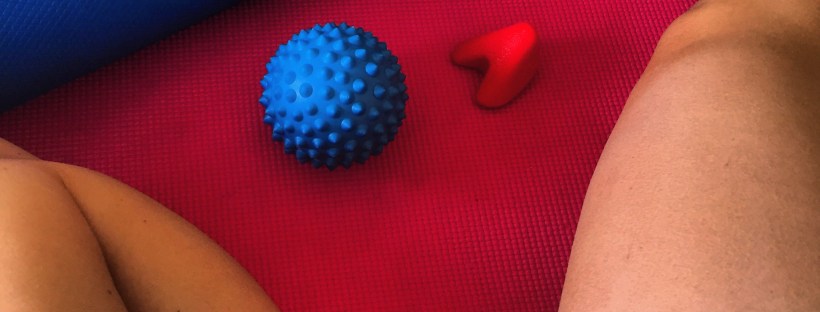
Recovery is one of the most vital components of a well formulated fitness program and is often the most underrated. When using the word recovery it refers to both rest days, stretching, foam rolling and refuelling the body.
FOAM ROLLING
First off I want to talk about the wonders of foam rolling which is a type of Self Myofacial Release (SMR)! Foam rolling has become my life after several injuries and it can make such a difference to my recovery, further gym performances and also alleviating some DOMS (this is just me, it may not be the same for everyone). Research has found that foam rolling prior to static stretching can hep improve ROM (range of motion) and flexibility of the muscles. Until recently, I just rolled over my muscles continuously for around 10-20 seconds and did some stretching, however, I started using Kayla Itsines’ Sweat app and this discussed using the foam roller on trigger points to help release tension and it gave a guide of how long should be spent foam rolling each body part. For example, 60 seconds on each calf, shin, quad, pec, and each side of the back and 30 seconds on each glute. It encourages you to stop on points that are sore and use small rolls to release the trigger point. I have found this has really helped when I have gotten tight calves from my soles injury.
Foam rolling can help to prevent the reoccurrence of old injuries and stiffness or soreness from these injuries too.
Foam Rolling helps to increase the blood flow to your muscles and it can help your muscles to repair faster, hence having a shorter recovery time.
COOL DOWN/STRETCHING
In terms of cooling down after exercise there are several different components that are vital to reducing the effect of exercise on the muscles in coming days. Firstly, some form of active recovery should be completed for 5-10 minutes after a workout. This needs to be the same type of exercise you were doing at a lower intensity or a walk. This helps to flush the by-products created through energy production like Hydrogen ions and Lactic Acid, hence helping to reduce residual fatigue in the muscles.
There is also passive recovery, which is complete rest to allow the body to restore its CP stores (which is a component in energy synthesis for approximately the first 10 seconds of exercise). This passive recovery is also incorporated into training for weight lifters to improve their ATP-PC system.
There are 4 classes of stretching: Static, Dynamic, Passive and Active.
Generally, dynamic stretching is incorporated into the warm up but could be used as the active recovery component of a workout. Dynamic stretching helps to improve ROM.
Static stretching is when you hold a position that is challenging but comfortable for 10-30 seconds. This type of stretching helps muscles to relax, muscle fibres to realign and to re-establish the muscles normal range of movement.
I find that doing yoga is a good combination of both dynamic and static stretching and it has really helped me to improve my flexibility, hence giving me a greater range of movement, especially for exercises like straight leg deadlifts and core exercises that require straight legs.
Passive stretching is when outside assistance is provided to help the stretch. The outside assistance could be body weight, a strap, leverage, gravity or another person (Proprioceptive Neuromuscular Facilitation or PNF stretching). This type of stretching requires the muscle to be relaxed and for the external force to do the stretching. An example is using a friend or wall to increase a lying hamstring stretch.
Active stretching is when you actively contract the muscle in opposition to the one that is being stretched and no assistance is being used. This type of stretching is the most low risk because you are controlling the stretch entirely. An example of this type of stretch is a side bend – the right oblique muscles will contract, pulling the upper body to the right and hence the left oblique muscles will be stretched.
There are other methods that have been researched that potentially aid the recovery process and these include neural strategies like:
- Cold Water Immersion – results in lower muscle soreness, reduced inflammation, swelling, muscle spasms and muscle damage – 10-12 degrees celsius
- Contrast Water Therapy – utilising a 3:1 ratio of hot (37-43 degrees celsius) to cold (12-15 degrees celsius)
- Hot Water Immersion – this helps promote blood flow to the skin and soothes sore muscles causing them to relax. Blood vessels expand allowing more oxygen rich blood to move around the body
- Massage – helps to relax the body but there is actually no evidence that suggests it helps to reduce DOMS, however, it can have psychological benefits due to its relaxing nature
- Sleep – allows the body to completely recover by repairing muscles and other tissues as the blood supply can increase to these areas while the brain is functioning less.
- Compression Garments – facilitate the removal of lactic acid and can help to increase blood circulation to the limbs
REFUELLING
One of the most important components of recovery is refuelling the body. It can make the difference between a successful training program and becoming overtrained and sick. Firstly, water is the most important thing to get into you body after a workout to replace all the water that has been lost. A good indicator is for every kg of body weight lost during exercise you should drink 1.5L to replace the lost fluid. Make sure you drink room temperature water as cold water can actually shock your system when your body is hot.
Next up make sure that you are eating enough food to sustain your body and also account for all the exercise you are doing. For example, I always use to consume around 1600 calories because this is what My Fitness Pal recommended for me (this puts the body into starvation mode) , however, I have since learned that in reality on a day where I am not training I should be consuming around 1800 calories and over 2000 on days I am training. This may be different for everyone, but just because you feel like you are eating too much doesn’t mean that you will put on weight. Often females are barely consuming enough to maintain there basal metabolic rate (calories burned at rest during a day), let alone sustaining all the exercise on top of it. Often people see better results by increasing their food intake when working out vigorously (with healthy foods).
REST DAYS
Rest days are so important that I am going to write a whole post on them and why they are needed. I have learned through experience the differences that they can make.
Thankyou for reading, if you have any questions don’t hesitate to ask
Love Caite xx
http://www.fleetfeethartford.com/sports-medicine/benefits-of-foam-rolling
https://www.kaylaitsines.com/blogs/lifestyle/44396547-foam-rolling-benefits
http://www.mensfitness.com/training/build-muscle/12-signs-youre-overtraining
http://sportsmedicine.about.com/od/sampleworkouts/a/RestandRecovery.htm
http://sportsmedicine.about.com/od/tipsandtricks/a/activerecovery.htm
A lot of my research was obtained several years ago for a sport science project 🙂
 Journey to Fitness